
Last Updated on April 13, 2022
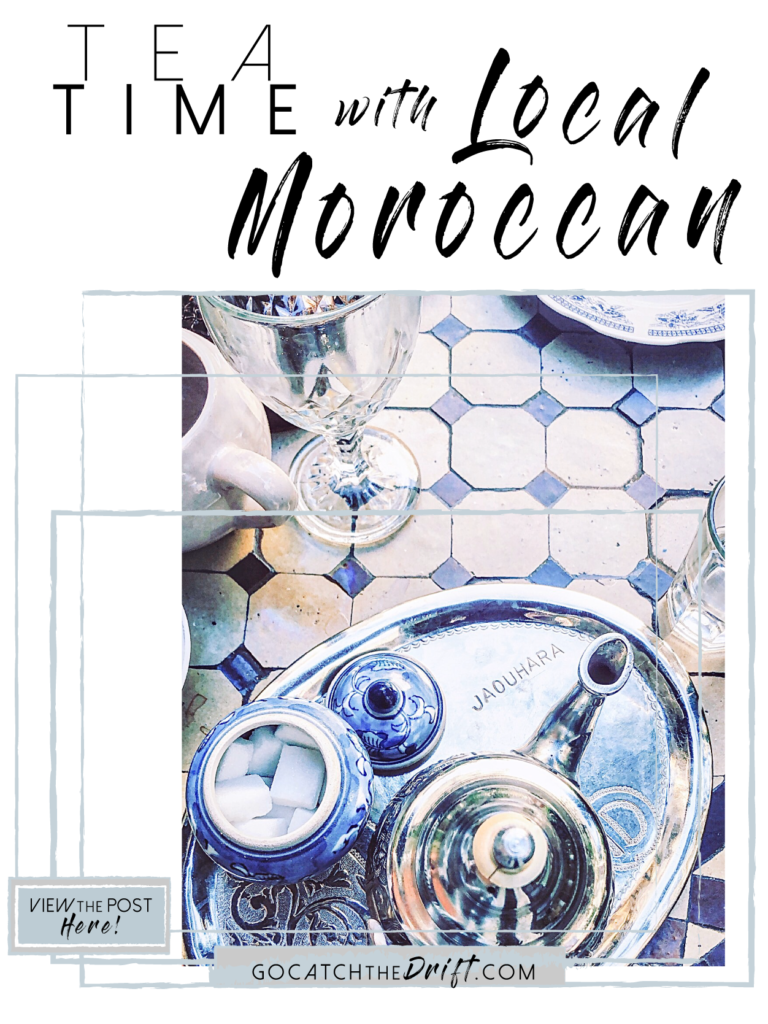
After finishing up a wonderful baking class at the Palais Amani, we sat down for tea time with some of the staff, who are locals, born and raised in Morocco. They gave us some insights on the local culture.
Would you like some tea with your sugar?
Speaking of tea time, Moroccan mint tea tends to lie on the sweet side. They are all about their sugar in Morocco.
Between mint tea and cookies that are often served with it, they don’t lack in their sugar intake.
We learned that when Moroccans get married, it is tradition for every single guest to bring two bags of sugar for the couple. This signifies the guest’s wishes for the couple to have a sweet marriage.
For a small wedding of 50 guests, that’s 100 bags of sugar! I asked how long that takes them to go through – she said a year a two. Woof! I don’t even think I go through two bags of sugar in a year.
From my observations of the culture, the men tend to be quite lean, whereas the women tend to fall on the opposite side of the spectrum.
With a more traditional culture, the men usually have very physical jobs and the women are the homemakers.
I now pronounce you husband and wives.
In the Islamic culture of Morocco, it was acceptable for men to have four wives along with as many girlfriends on the side that they would like. That’s a lot of sugar!
Women, on the other hand, were only allowed their one husband. If they were unhappy or argued with the other wives, the man would divorce her, which would be highly frowned upon for the woman.
Home sweet riad.
Women were discouraged from leaving their homes, or would need permission to do so. The men would build a home for their wives, known as a riad.
These riads would bring the outside into their home so they would still be able to enjoy the outdoors, even if they were not allowed out of their homes.
Each riad would have a large garden in the middle, enclosed by the walls of the home.
You will never see a riad with outward facing windows onto the streets, only into the riad’s garden.
There were enough rooms for each of the four women to live comfortably.
The garden of each riad is typically divided into four quadrants, each to represent a season.
Most of the quadrants are identical, filled with orange or lemon trees, and a fountain dividing the middle.
Some riads have a small pool for the women to cool off in.
More Sugar, Please?
Some other tips we learned over tea at our Riad in Marrakech were more directed at locals and their games with the tourists.
The big tip we took away is DO NOT LISTEN TO LOCALS — especially in the Medina or around local attractions.
In Marrakech, there is a museum that is always open, but boys hang around the area leading to this museum and will tell you it is closed to try to fool you.
Many other local men and children will ask you where you are going (or just assume), and point you in the wrong direction.
Their purpose is to try to get you lost. They will then come to your rescue and keep “helping” you find your way, in hopes of a generous tip for their assistance. Don’t fall for it! Trust your instincts and if you are completely lost, just keep walking until you figure it out, or as a store owner that cannot leave to follow you.
Navigate like the locals.
Although, the locals probably know the medina of Fez or Marrakech like the back of their hand, there are signs hanging from the souks that you will occasionally see.
Figure out what those signs are indicating and use those as your guide to at least get you to a known destination if you are lost.
Just beware, if you stop, look confused, or look at a map, you will be approached by a local ready to “help”. Just say no!
Want more deets from my trip to Morocco? Check out my Weekly Journal #13 + 14!
